Reviewed · RIGA
Private Soviet Riga tour
Riga’s Soviet past is not tucked away in one museum. It is written across its squares, monuments, churches, apartment blocks, theaters, and former government buildings. This private walking tour connects those places into one clear story, from Stalin’s rule to Latvia’s independence in 1991.
I like the private format, which lets you stop and ask questions instead of following a fixed script. I also like the way guide Edvards brings in his own family experience, a detail that makes political history feel personal. The main drawback is the pace: ten stops in about two hours means you will cover a lot, but you will not linger long at every site.
Key points to know before booking
- A walking lesson in Soviet Riga: Follow the story from the Latvian Riflemen and Stalin to Gorbachev and independence.
- Edvards brings personal context: His family experience helps explain what Soviet rule meant in daily life.
- The KGB building is a major stop: Learn about recruitment, interrogation, surveillance, and the building’s role in Latvia.
- The Baltic Way and 1991 barricades get proper attention: These peaceful independence movements form the emotional center of the tour.
- It is private for up to 15 people: You can ask questions and request more detail on topics that interest your group.
- The route ends outside the Old Town: The Daile Theatre is about a 15-minute walk from the historic center.
Riga’s Soviet story begins with the Latvian Riflemen
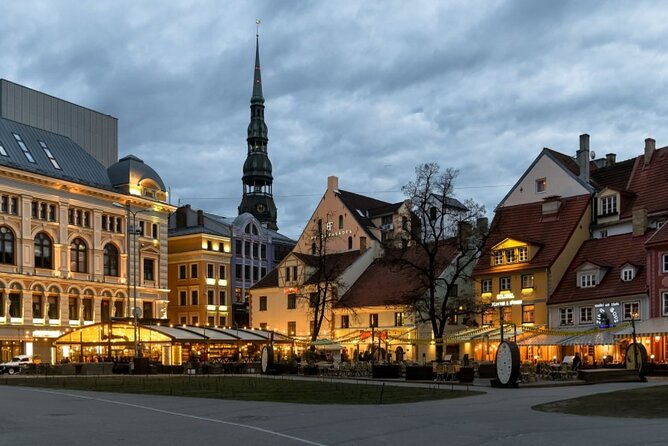
The tour starts at Latviešu strēlnieku laukums, or Latvian Riflemen Square. This is a useful place to begin because the Latvian red riflemen open a larger discussion about Soviet cultural memory, political symbolism, and the way public monuments can carry different meanings over time.
Edvards lays out the Soviet period by era, from Stalin to Khrushchev, Brezhnev, and Gorbachev. That framework matters. Without it, Soviet Riga can seem like one long block of gray buildings and official slogans. With it, you can begin to see that life and policy changed across the decades.
You spend about 15 minutes here. That is enough time for an overview, but not a full treatment of the riflemen’s complicated history. I would listen closely and ask questions if you want to understand how Latvia’s own past was folded into Soviet storytelling.
The square also gives you an early lesson in how this tour works. It is not simply a march from one photo stop to the next. Each place is used to explain an idea: political control, public memory, cultural identity, or resistance.
More Soviet-era history walks:
- Riga: Stories of Soviet Riga Guided Walking Tour
★ 4.9 · 29 reviews - Private Day Tour to Sigulda, Turaida Castle and Soviet Bunker
★ 4.5 · 8 reviews - Full-Day Private Trip to Nuclear Missile Base and Secret Soviet Bunker
★ 4.5 · 7 reviews
Deportations and the human cost of occupation
The next stop is outside the Museum of the Occupation of Latvia. The tour discusses the deportations to Siberia, including why they happened, their scale, and their effect on Latvian families and society.
You do not receive an admission ticket as part of the tour, and the itinerary does not include a museum visit. That is important to understand before booking. You will hear the historical explanation from the guide at the site rather than spending time inside the exhibition rooms.
The ten-minute stop is brief, but the subject is heavy. Ask Edvards to clarify dates, motives, or the impact on ordinary people if those questions matter to you. His style, according to the information provided, is easy to follow while still allowing room for detailed questions during the walk.
For many people, this will be the point where the tour shifts from political history to personal loss. The story of Soviet Riga is not only about buildings and leaders. It is also about families separated from their homes and a society forced to live with fear.
The 1991 barricades and Latvia’s fight for independence
At 1991 Barikazu Laukums, the focus moves to the barricades. This was the climax of Latvia’s fight to restore independence, and the guide explains how the movement developed and what happened during this tense period.
This stop gives the tour a strong sense of direction. You have already heard about Soviet power and repression. Now you see how Latvia’s independence movement gathered force. The emphasis is not just on a date or a political declaration. It is on the people who took part and the pressure surrounding the events.
You spend about ten minutes here. That can feel short for such an important subject, especially if you already know something about the independence movement. Still, the private setting helps. You can ask Edvards to slow down or explain an event in greater detail, something that is harder to do on a large group tour.
The barricades also prepare you for the next stop, which looks at a much larger act of peaceful resistance across the Baltic states.
The Baltic Way, a human chain across three nations
The Baltic Way Footprint Monument recalls one of the largest nonviolent anti-Soviet demonstrations in the Baltic region. The guide explains the logistics, the mood of the period, and the political effect of the event.
This is one of the tour’s most distinctive subjects. Instead of focusing only on official buildings, the route shows how ordinary people used public action to express a shared demand for freedom. The discussion helps place Latvia’s movement alongside those in Estonia and Lithuania.
You will spend around ten minutes at the monument. The guide covers how the event was organized, what it felt like at the time, and why it mattered. If you are interested in civic movements, peaceful protest, or the final years of the Soviet Union, this is a stop worth taking seriously.
The footprint memorial is also a reminder that Riga’s Soviet story is part of a wider Baltic story. Latvia’s independence did not happen in isolation. It was tied to events and public feeling across the region.
A few more Riga half-days to weigh up
- Private Riga Old Town Walking Tour
★ 5.0 · 62 reviews - Private Full-Day Trip to Turaida, Sigulda, and Cesis
★ 4.5 · 52 reviews - Ultimate Husky dog sledding experience in Latvia – Private tour from Riga
★ 4.5 · 45 reviews - Private trip – Hill of Crosses / 2 countries in 1 day
★ 5.0 · 44 reviews
The Freedom Monument and a symbol that survived
The Freedom Monument is Riga’s best-known landmark, but this tour gives it a different purpose. Instead of treating it as a quick photo stop, Edvards explains its meaning and how it survived the Soviet period.
The monument carries obvious weight in a city that spent decades under Soviet rule. Its survival is part of the story. Public symbols can be removed, hidden, renamed, or reinterpreted by governments. The fact that this monument remained in Riga gives you a way to discuss cultural identity under political control.
You spend about ten minutes here. The site is central and easy to recognize, so it also works as a useful point of orientation in Riga. If you have already seen the monument on another walk, the added historical context can make the visit feel new.
I especially like this part of the route because it connects national memory with the physical city. You do not need a large exhibit to understand why a monument can matter. A few focused explanations at the right place can do a lot.
The Orthodox cathedral and religion under Soviet rule
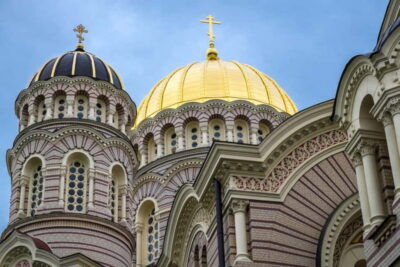
The Nativity of Christ Cathedral introduces the role of religion during the Soviet era. The guide discusses how religion was treated under the system and what that meant for an important Orthodox church in central Riga.
This stop broadens the tour beyond deportations, secret police, and independence politics. Soviet power also reached into religious life. Churches could be controlled, restricted, repurposed, or treated with suspicion, depending on the period and the institution.
The cathedral visit lasts about ten minutes, and admission is not listed as an extra cost. The tour is conducted from the outside route, so you should not expect a long interior visit. The value here is the explanation of the building’s place in Soviet Riga, not an architectural tour of the cathedral.
If religion, architecture, or the relationship between church and state interests you, ask questions here. The private format gives you room to connect this stop with the earlier discussion of national identity and public memory.
Hotel Latvia and the watchful Soviet welcome
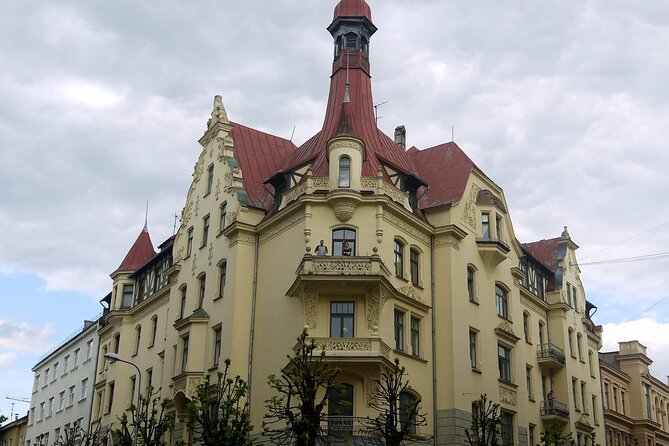
The Radisson Blu Latvija Conference & Spa Hotel was formerly Hotel Latvia. During the Soviet period, it was the only hotel where Western tourists were allowed to stay in Riga. The tour discusses its famously bugged rooms and the controlled environment surrounding foreign visitors.
This stop gives you a glimpse of daily surveillance from the other side. A Western visitor might have seen a modern hotel, while the state saw a place where foreign contacts could be watched and managed. The contrast helps explain how Soviet Riga presented itself to outsiders.
You spend about ten minutes at the hotel. There is no hotel pick-up or drop-off, and the stop is part of the walking route. You are learning about the building’s past, not booking a room visit or a private inspection of the former rooms.
I find this type of stop especially useful because it shows that surveillance was not limited to prison cells and government offices. It could be built into ordinary travel, lodging, conversations, and movement through the city.
Brivibas Iela, from Lenin Street to Freedom Street
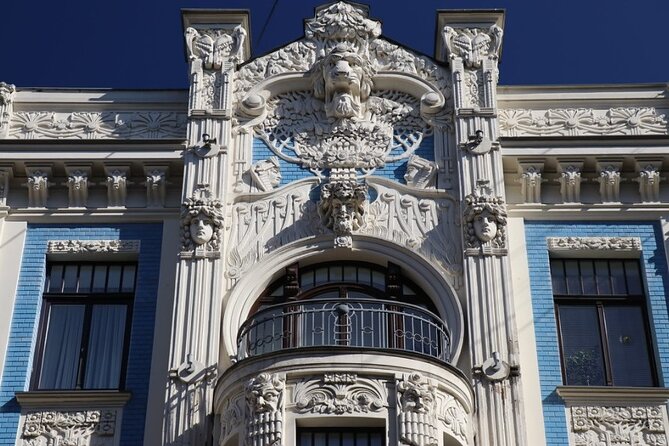
Brivibas Iela means Freedom Street. During the Soviet period, it was known as Lenin Street. The guide points out Soviet-era residential architecture and discusses Rigas Modes, Latvia’s most famous fashion house during the Soviet years.
This is one of the more everyday sections of the route. You are no longer looking only at monuments tied to major political events. You are seeing the kind of street where people lived, shopped, dressed, and moved through the city.
The residential buildings help you read Riga’s architecture through the Soviet period. The fashion house adds a social and cultural angle. Clothing, design, and consumer goods may seem far removed from political repression, but they also show how people found ways to express taste and identity within a limited system.
The stop lasts about ten minutes. Since you are walking along a working city street, the experience is more about the guide’s interpretation than about a single attraction. Pay attention to the buildings around you rather than expecting a formal sight with an entrance.
The KGB building and the machinery of control
The KGB building is likely to be the most arresting stop for many people. It served as the headquarters of the Soviet secret police in Latvia, and Edvards explains recruitment methods, interrogation methods, and the institution’s wider role.
The description of the building includes a grim local saying about its height and the distance to Siberia. That line captures the fear associated with the place, but the real value comes from the discussion of how the KGB operated. The tour moves beyond the label of secret police and looks at the methods used to recruit, question, pressure, and control people.
You spend about ten minutes here, which is enough for a strong introduction but not enough for every detail. If this subject matters to you, use the walking time afterward to ask follow-up questions. The guide’s ability to explain more as you go is one of the private tour’s best features.
This stop can be emotionally difficult. The tour deals with surveillance and interrogation in a direct way, so it may not suit someone looking for a light city walk. For anyone wanting to understand how Soviet power worked in Latvia, though, the KGB building gives the subject a concrete address.
The Daile Theatre and the collapse of the Soviet Union
The final stop is the Daile Theatre, an important example of Soviet-era architecture. Here, the guide discusses the collapse of the Soviet Union and brings the historical story toward its end.
The building provides a fitting last chapter. The tour begins with early Soviet symbolism and moves through occupation, deportation, religious control, surveillance, public protest, and independence. At the theater, the focus turns to the system’s collapse.
You spend about 15 minutes here, making it one of the longer stops. The tour ends at Brivibas iela 75, roughly a 15-minute walk from Riga’s Old Town. That makes the finish practical: you can continue toward the historic center after saying goodbye, though you will need to make your own way back.
The Daile Theatre is also a good reminder that the Soviet period left behind more than political memories. It shaped the streets, buildings, and public spaces you see in Riga today.
Is $180.62 a fair price for a private group?
The price is $180.62 per group of up to 15 people. That is not a cheap individual walking tour, but the calculation changes if you fill even a small group. Four people would pay roughly $45 each, while a larger party could bring the cost per person down sharply.
The price includes a professional guide, local taxes, and the private tour. It does not include hotel pick-up or drop-off, and the tour does not list admission fees to paid attractions. Since the route is built around public places and outdoor explanations, there are no extra ticket costs identified in the supplied details.
I see the strongest value for families, couples traveling with friends, and small groups who want to ask questions. A large group may also save money per person, but ten stops in two hours can make the walk feel brisk. The private format is most useful when your group is willing to take part rather than simply listen.
The tour is offered in English, lasts about two hours, and starts at Latvian Riflemen Square. It ends at the Daile Theatre. Public transportation is nearby, and most people can take part. Children must be accompanied by an adult, and service animals are allowed.
The confirmation arrives within 48 hours of booking, subject to availability. You can cancel for a full refund up to 24 hours before the start time. Changes or cancellations made inside that window are not accepted for a refund, and the cut-off follows Riga local time.
Who will get the most from this Riga walking tour?
I would choose this tour if you want Riga to make more sense beyond its medieval streets and attractive cafes. It suits anyone interested in Latvia’s occupation, the Soviet state, the KGB, religion under communism, or the independence movements of the late 1980s and early 1990s.
It is also a good match for people who prefer conversation to audio guides. Edvards is described as passionate and easy to follow, and his personal family connection gives the material a human scale. You can ask about points that catch your attention while walking between sites.
I would think twice if you want a slow architectural walk, long museum visits, or extensive time inside each location. The tour covers ten stops in approximately two hours, so its purpose is connection and context rather than exhaustive sightseeing.
You should also be ready for serious material. Deportations, surveillance, interrogation, and political repression are central subjects. The tone can be engaging, but the content is not light.
Should you book the Private Soviet Riga tour?
Book it if you want a clear, personal introduction to Riga’s Soviet past and you value the freedom to ask questions. The route covers a strong range of subjects, from public monuments and street architecture to deportations, the KGB, the Baltic Way, and the collapse of Soviet power.
The best reason to book is the combination of private attention and personal explanation. Edvards can adjust the discussion to your interests, and his family connection adds a human voice to events that can otherwise feel distant.
Skip it if your main goal is entering museums or taking a relaxed sightseeing stroll. For everyone else, especially a small group sharing the cost, this is a focused way to understand the forces that shaped modern Riga.
FAQ
How long is the Private Soviet Riga tour?
The tour lasts approximately two hours.
What language is the tour offered in?
The tour is offered in English.
How many people can join the private tour?
The price covers one private group of up to 15 people.
Where does the tour start?
The tour starts at Latviešu strēlnieku laukums, Centra rajons, Riga, LV-1050, Latvia.
Where does the tour finish?
The tour finishes at the Daile Theatre at Brīvības iela 75. It is approximately a 15-minute walk from Riga’s Old Town.
Is hotel pick-up included?
No. Hotel pick-up and drop-off are not included.
Can I cancel for a full refund?
Yes. You can cancel up to 24 hours before the experience start time for a full refund. Cancellations or changes made less than 24 hours before the start time are not accepted for a refund.
Just added around Riga
- Group Tour: Sigulda and Turaida from Riga.★ 4.5 · 3 reviews
- Fun Walk Private Tour Around Central Market Riga★ 4.5 · 3 reviews
- Latvia’s Switzerland and Gauja National Park Tour★ 5.0 · 3 reviews
- Hiking Adventure in Gauja National Park – 7 Days★ 5.0 · 3 reviews
- Jurmala sunset tour★ 4.5 · 3 reviews
- Full Day Gauja National Park Ultimate Hiking & Sightseeing Trip★ 5.0 · 4 reviews
- Riga Private Walking Tour★ 5.0 · 4 reviews
- Riga Medieval Dinner★ 4.0 · 4 reviews
Soviet History Tours, compared.
Private Day Tour to Sigulda, Turaida Castle and Soviet Bunker
Read our review →