
Reviewed · RIGA
Private Riga Art Nouveau Tour
Riga’s Art Nouveau district is best understood on foot, one facade at a time. This private walk takes you from the Latvian National Opera through Tērbatas iela and Alberta iela, showing how Riga’s architecture changed from decorative European styles to a more national form of design.
I like the private format, which lets your guide adjust the talk to your interests, and I like the wider route beyond the best-known streets. Guides such as Emils and Eduards have led this walk with clear enthusiasm for art history. The main drawback is that two hours goes quickly, especially if you want photographs, detailed questions, and time inside museums or buildings.
Key points to know before booking
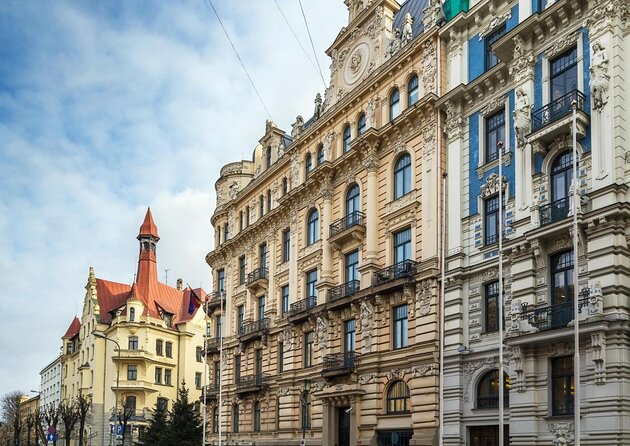
- Alberta iela is the grand finale: Spend the most time among Riga’s famous Art Nouveau facades, symbols, curves, and sculpted details.
- The route shows several styles: You will see vertical Art Nouveau, National Romanticism, eclectic decorativism, and the meeting point of Art Nouveau and Neoclassicism.
- Your guide can shape the conversation: This is useful if you care more about architecture, Latvian identity, Jewish history, building interiors, or conservation.
- It is a walking tour with moderate physical demands: The route lasts about two hours and moves through central Riga streets.
- The group price favors families and small groups: At $178.71 for up to 15 people, the cost is strong when shared, but less attractive for one or two people.
- Check pickup details before you go: The tour begins at the Latvian National Opera and ends near Alberta and Strelnieku streets. The practical details say hotel or port pickup may be available, but pickup is also listed as not included.
Why Riga is such a good city for Art Nouveau
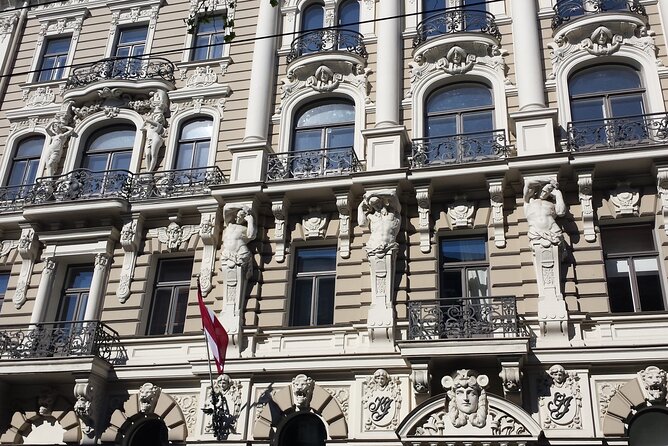
Riga changed quickly in the late 19th and early 20th centuries. As the city expanded beyond its older center, new streets filled with apartment blocks and public buildings. That growth created space for fashionable architectural ideas, including Art Nouveau.
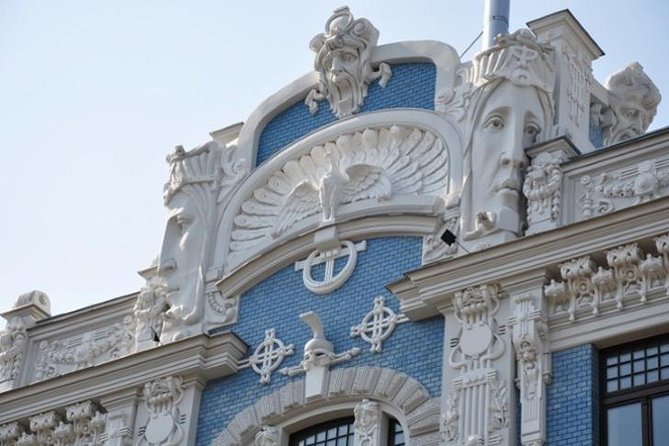
The style is easy to spot, but not always easy to explain. Look for curved lines, plant forms, masks, geometric patterns, dramatic entrances, and facades that seem designed to make a daily apartment building feel like a work of art. Your guide helps connect those details to the city’s growth and changing identity.
I find the private setting especially useful here. Riga’s buildings can look similar at first glance, but the differences matter. One facade may use flowing floral shapes, another may favor heavy stonework, and another may bring in local motifs to express Latvian culture.
This walk also takes you beyond the medieval streets of Old Riga. That matters because the Art Nouveau story belongs mainly to the newer districts, where Riga’s expansion produced broad streets and large apartment buildings. You are not just checking off famous facades. You are seeing how the city developed.
More Art Nouveau walks:
- Riga Art Nouveau walking tour
★ 4.0 · 27 reviews - Old Town And Art Nouveau Walking Tour Of Riga
★ 4.0 · 15 reviews - Small Group Art Nouveau walking tour 2h
★ 4.5 · 6 reviews
Starting at the Latvian National Opera
The meeting point is the Latvian National Opera at Aspazijas bulvāris 3. The tour begins with about 15 minutes of background on Riga’s development, the rise of Art Nouveau, and the reasons the style became so prominent here.
That opening is useful because it gives the rest of the walk a framework. Instead of looking at decoration as a collection of pretty details, you can watch the city move through different design phases. The Opera also gives you a clear central starting point, close to major streets and public transport connections.
The first section is more about orientation than facade hunting. I would arrive a little early, especially if you are meeting your guide in a busy central area. Since the walk ends in a different part of town, bring only what you want to carry for two hours and wear shoes that are comfortable on city pavements.
The tour does not list admission to the Opera or other buildings, and the stops are described as exterior visits with commentary. You should expect architecture from the street rather than a full indoor museum tour.
Tērbatas iela and the changing Art Nouveau style
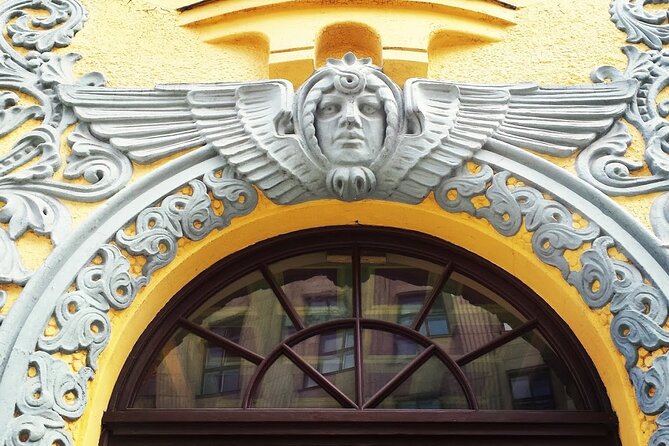
At Tērbatas iela, the guide spends about 20 minutes explaining vertical Art Nouveau and National Romanticism. This is one of the most useful stops for comparing styles because it shows that Art Nouveau was not one fixed look.
Vertical Art Nouveau often draws the eye upward. Buildings may use tall lines, narrow windows, and strong vertical divisions to make an apartment block appear taller and more imposing. National Romanticism takes a different path, using heavier forms and references to local culture and nature.
I like this part of the route because it helps you see progression. The buildings are not simply decorative. They reflect changing taste and a growing interest in national identity. Your guide can point out how the movement developed through the years rather than treating every ornate building as the same.
Tērbatas iela also helps break up the famous-street effect. Alberta iela is the star of the route, but seeing other examples first makes the later facades easier to read. If you are interested in photography, this is a good place to practice spotting repeated motifs before reaching the most elaborate section.
Riga Secondary School No. 40 and National Romanticism
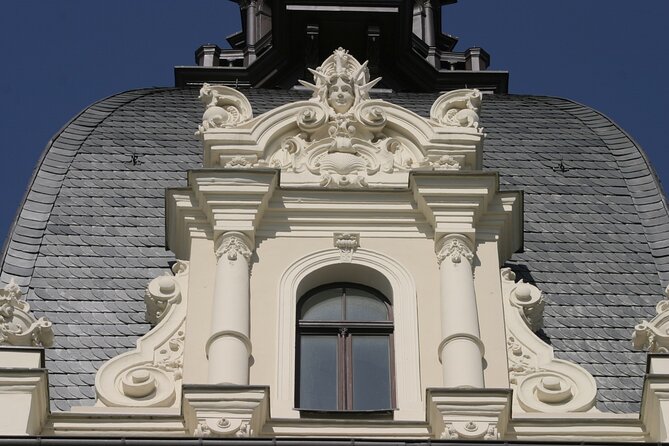
The stop at Riga Secondary School No. 40 lasts about 10 minutes. It focuses on National Romanticism and the role architecture played in building a national identity before Latvian independence.
That subject gives the walk more weight than a simple tour of decorative buildings. Architecture can express who a society believes it is, especially during a period when national movements are gaining force. The school provides a clear example of how public buildings could carry that message.
I would pay close attention to the contrast between a school and the grand apartment houses elsewhere on the route. A residential facade may aim to impress its owners and neighbors, while a school can express a broader civic purpose. The stop is short, so have your questions ready if national identity and Latvian design interest you.
This is also a reminder that Riga’s Art Nouveau heritage is not limited to luxury-looking apartment blocks. The movement and its related styles appeared in public buildings, schools, and other parts of everyday city life.
A few more Riga half-days to weigh up
- Private Riga Old Town Walking Tour
★ 5.0 · 62 reviews - Private Full-Day Trip to Turaida, Sigulda, and Cesis
★ 4.5 · 52 reviews - Ultimate Husky dog sledding experience in Latvia – Private tour from Riga
★ 4.5 · 45 reviews - Private trip – Hill of Crosses / 2 countries in 1 day
★ 5.0 · 44 reviews
The Jewish Museum and Riga’s German influence
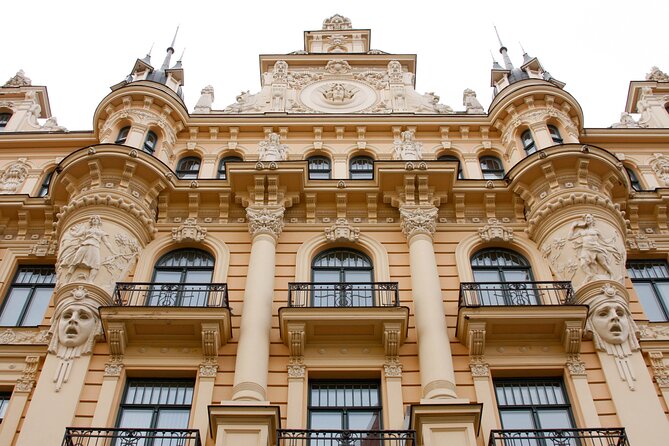
The route then reaches the Jewish Museum, also called the Museum Jews in Latvia, for about 15 minutes. Here, the guide discusses the meeting of Art Nouveau and Neoclassicism, along with the influence of Riga’s German community on the city’s development.
This stop adds cultural context to the architecture. Riga was shaped by different communities over many decades, and the city’s buildings reflect those overlapping influences. The guide’s task is not only to point out ornaments but to explain how architectural taste connected with the people who commissioned, designed, and used these buildings.
The comparison with Neoclassicism is important. Art Nouveau can look free-flowing and organic, while Neoclassical design often relies on order, balance, and references to earlier European architecture. Seeing the two ideas together helps you understand why Riga’s facades can feel both modern and formally traditional.
The stop is not described as a museum admission visit, so plan on commentary from the route rather than a separate museum tour. If you want to visit the Jewish Museum itself, you would need to arrange that separately and allow extra time.
The Ministry of Economics and the practical side of design
At the Ministry of Economics of the Republic of Latvia, you spend around 15 minutes looking at eclectic decorativism. The discussion moves from appearance to construction, including building practices, apartment layouts, and current conservation work.
This is one of the most practical parts of the experience. A facade tells only part of the story. You also want to know how these buildings worked as homes, how rooms were arranged, and why certain structural choices mattered.
The talk about conservation is valuable for anyone who wonders how old city buildings survive. Decorative facades require care, and modern restoration often involves difficult choices. A guide can show you why preserving historic character is more complicated than applying a fresh coat of paint.
Eclectic decorativism is also a useful term to encounter on the walk. It describes buildings that draw from several decorative traditions rather than following a single pure style. That mixture helps explain why Riga can feel visually varied even within a concentrated Art Nouveau area.
Forty minutes on Alberta iela
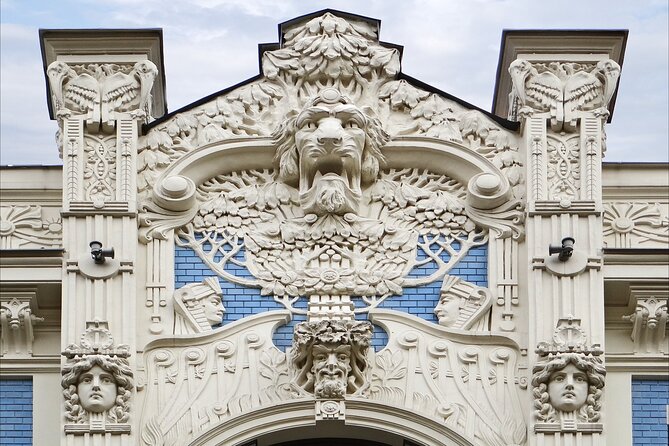
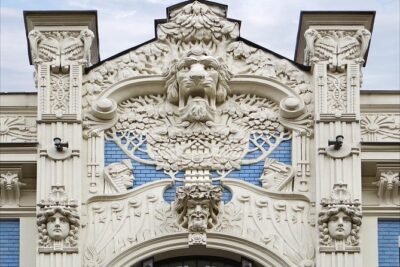
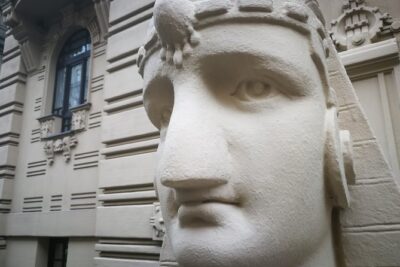
Alberta iela receives the longest stop, about 40 minutes, and for good reason. This is Riga’s best-known Art Nouveau district, with ornate buildings, sculpted details, elegant facades, curves, floral forms, and symbolic decoration.
The street is part of Riga’s UNESCO World Heritage area. You will see the style at its most concentrated here, but the value of a guide is in the details. Without explanation, you might notice a dramatic face over a doorway or an unusual arrangement of windows. With context, you can start asking why the architect placed it there and what mood the building was meant to create.
I would save some camera time for this section. The facades reward slow looking, and the street can easily tempt you into taking a picture of every doorway. Try first to identify the main visual elements: repeated patterns, sculpted figures, plant shapes, strong vertical lines, and the balance between structure and decoration.
The guide can also tie Alberta iela back to the earlier stops. The vertical effects make more sense after Tērbatas iela. The national elements connect to the school. The mixture of styles becomes clearer after the discussion near the Jewish Museum and the Ministry of Economics.
The tour ends near the corner of Alberta and Strelnieku streets, close to the Riga Art Nouveau Center at Alberta iela 12. This is a useful finish because you remain in the district after the guide leaves. You can continue looking at buildings, visit the center separately, or simply walk on to your next Riga stop.
The important limitation is timing. Forty minutes is enough for a guided introduction, but not enough for a slow architectural study of every major building on Alberta iela. If you have a strong interest in design, ask your guide at the start if the pace can favor fewer buildings and more detailed explanation.
What the private format is worth
The advertised price is $178.71 per group, with up to 15 people. That is a good arrangement for a family, a group of friends, or a small cruise party that wants a private guide. A full group would bring the cost to roughly $11.91 per person, before any optional expenses.
For one or two people, the value is harder to judge. You are paying for privacy, a guide focused on your questions, and a route that can be adapted to your interests. If you only want a quick look at Alberta iela, you could explore that area independently at no charge. If you want the history and style explained as you walk, the private fee makes more sense.
The walk is also a sensible choice for mixed groups. Architecture fans can ask technical questions, while others can focus on Latvian identity, city growth, or the social background of Riga’s buildings. A guide can adjust the balance instead of delivering one fixed speech to a large crowd.
The tour is offered in English and uses a mobile ticket. Local taxes, a professional guide, and the private tour are included. Building admissions are not listed as part of the experience, and the stops are presented as free exterior visits.
Timing, walking, and pickup details
The tour lasts about two hours, with stop times adding up to just under that. The itinerary is compact but not rushed on paper: the longest explanation comes at Alberta iela, while the earlier stops provide shorter comparisons.
You should have a moderate level of physical fitness. The experience involves walking between central Riga locations, standing outside, and keeping pace with a guide. The data does not specify a total walking distance, so ask for details if that is important to you.
The pickup information needs clarification. The highlights describe hotel or port pickup and drop-off, but the included services exclude hotel pickup and drop-off. The stated meeting point is the Latvian National Opera, and the stated endpoint is the Art Nouveau district near Alberta and Strelnieku streets.
I would plan to meet at the Opera and make my own way to the endpoint unless the operator confirms a pickup arrangement before the day of the tour. This avoids a last-minute misunderstanding.
Service animals are allowed. Confirmation is sent within 48 hours of booking, subject to availability. Free cancellation is available if you cancel at least 24 hours before the local start time. Late cancellations and changes inside that window are not accepted.
Who will enjoy this Riga walking tour
I would choose this experience if you want more than a photo stop on Alberta iela. It suits people who like architecture, city planning, local identity, and the small clues that explain why buildings look the way they do.
It also works well for first-time visitors who want to understand the part of Riga outside the old walled center. The Opera starting point and the Art Nouveau district endpoint give the walk a useful direction through the city.
Families and groups should get the best financial value from the price. A private guide can also make the pace easier for a group with different interests. Ask questions early, since two hours is short and the route includes several themes.
I would think twice if you dislike walking, want extensive indoor access, or expect a full-day architectural course. This is an introduction with strong coverage of the main styles, not a specialist research tour.
Should you book the Private Riga Art Nouveau Tour?
Book it if you want Riga’s Art Nouveau buildings explained in context, especially if you are traveling with a group and can share the cost. The best features are the private format, the wider route, the clear progression through several styles, and the generous 40-minute focus on Alberta iela.
For a solo visitor on a tight budget, independent walking around Alberta iela may be enough. For everyone else, the guide adds real value by linking facades to Riga’s growth, national identity, community history, apartment design, and conservation.
Before booking, confirm the pickup arrangement and tell the guide what interests you most. If you want architecture, Latvian identity, museum context, or practical building details, the route has room for all of those topics. Just keep your expectations realistic: it is a focused two-hour walk, not an all-day museum visit.
FAQ
How long does the Private Riga Art Nouveau Tour last?
The tour lasts approximately two hours.
Where does the tour begin?
It begins at the Latvian National Opera, Aspazijas bulvāris 3, in central Riga.
Where does the tour end?
It ends in the Art Nouveau district near the corner of Alberta and Strelnieku streets, close to the Riga Art Nouveau Center at Alberta iela 12.
Is the tour private?
Yes. Only your group participates, with up to 15 people included in the group price.
What language is the tour offered in?
The tour is offered in English.
Is hotel or port pickup included?
The tour information describes hotel or port pickup and drop-off as a feature, but also states that hotel pickup and drop-off are not included. Confirm this point with the provider before booking.
Are admission tickets included?
The listed stops have free admission, and no separate paid admissions are included. The experience is described as a guided walking tour with exterior site visits and commentary.
What is the cancellation policy?
You can cancel for a full refund up to 24 hours before the local start time. Cancellations or changes made less than 24 hours before the start are not accepted.
Just added around Riga
- Group Tour: Sigulda and Turaida from Riga.★ 4.5 · 3 reviews
- Latvia’s Switzerland and Gauja National Park Tour★ 5.0 · 3 reviews
- Hiking Adventure in Gauja National Park – 7 Days★ 5.0 · 3 reviews
- Fun Walk Private Tour Around Central Market Riga★ 4.5 · 3 reviews
- Jurmala sunset tour★ 4.5 · 3 reviews
- Riga Private Walking Tour★ 5.0 · 4 reviews
- Full Day Gauja National Park Ultimate Hiking & Sightseeing Trip★ 5.0 · 4 reviews
- Riga Medieval Dinner★ 4.0 · 4 reviews
Riga Art Nouveau Tours, compared.
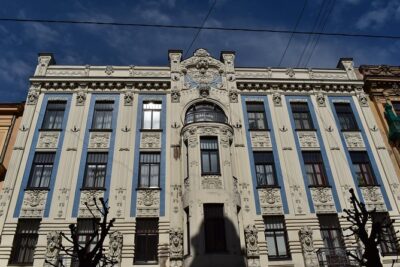
Ultimate Art Nouveau Experience in Riga – Private Tour
Read our review →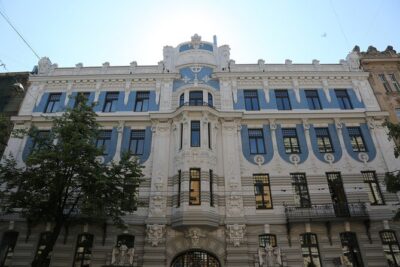
Riga’s Architecture: A self-guided audio tour of the city’s art nouveau history
Read our review →Browse the lists this tour appears in